
It is not uncommon for folks to behave in a massage clinic similarly to how they might in a doctor’s office. In a doctor’s office the doctor holds most of the authority and chooses for the patient what course of treatment should be followed.
Such folks may not think to communicate with the practitioner about what they want from the massage session. They are more likely to start the session exchanging few words and expecting the practitioner to perform some sort of predetermined routine. The problem with this approach is the individual misses out on the opportunity to get maximum benefit from the massage treatment. A more fitting relationship between the client and the practitioner is one where clients communicate freely about their preferences pertaining to the bodywork, both before and during the massage session.
Given the more interactive relationship, clients can ask the practitioner to work exactly on the body areas they want. Say you have an aching back — you can request that the practitioner spend the full massage session working on your back. Or you may experience tension headaches — you can ask for focus mostly on head and neck areas. You can request only upper body massage, or conversely ask for an overall relaxation massage with equal attention given to all body areas. As yet another example, you can even request abdominal massage. All qualified massage practitioners are trained to provide it and it can be beneficial for lower back pain and digestive problems.
As the client, you are in charge of your massage therapy sessions. These sessions should work for you. Being aware of your body, its likes and dislikes, and then communicating with your massage therapist will make a tremendous difference in the quality of the bodywork you receive.
By Larisa Goldin, MBA, LMP
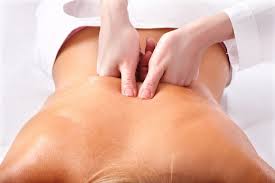 While many people are familiar with Western modalities of massage – Swedish, Deep Tissue, Sports, etc. – they are less aware of the rich massage traditions of Asia. What is Shiatsu Massage? Shiatsu is a form of massage that evolved in Japan. Like other forms of Eastern massage, it is grounded in the concept of balancing the flow of energy, called ki, in the body. Pain, illness, and disease are thought to result from blockages and imbalances of ki. The massage practitioner seeks to restore balance by tonifying the areas where there is a deficiency of energy and dispersing areas of excess.
 applied. The muscles are then kneaded and stretched with a lifting/kneading stroke and then smoothed, lengthened, and drained of excess fluid with long, firm strokes. Vibration or percussion may also be used to stimulate or release muscles. The limbs may be moved or shaken. The process is repeated on each area of the body for an overall calming and rejuvenating effect.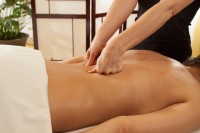
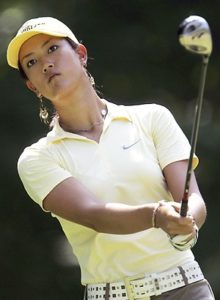 The main golf swing muscles and their role in the golf swing:

 e to welcome Bastine Hemp Chic. They are our new downstairs neighbors at our Roosevelt location.