Frozen Shoulder is Unlocked with Bodywork

by Diana Khoury

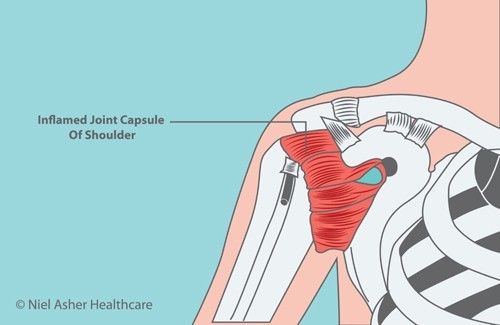
Frozen shoulder is a disabling condition characterized by pain, inflammation, stiffness and limited range of motion in the shoulder joint. The first symptoms are pain and an inability to perform daily tasks such as reaching or lifting. Shoulder function may be restricted for months or years, depending on the severity and course of treatment sought. Triggered by minor injury or improper movement (such as reaching backward from an abnormal position), the onset of frozen shoulder is gradual. Bodywork is often recommended as primary treatment for frozen shoulder – to improve function of the joint, reduce pain and facilitate increased range of motion.
frozen-shoulder-10
Frozen shoulder currently affects around 5% of the population. However, the condition is 5 times more common in Type I and II Diabetics, possibly due to elevated blood sugar levels, which cause increased stiffness (glycosylation) in connective tissues over time.1

Those additionally at risk for incidents of frozen shoulder include:

  • Individuals between the ages of 40-65
  • Women (60-70% of cases)
  • People with poor posture
  • Those engaged in regular overuse of shoulder muscles (in sports, manual labor, etc.)
  • People with recent shoulder injuries
  • Patients recovering from shoulder or reconstructive breast surgeries
  • Family members with a history of frozen shoulder issues (genetic component)1

The onset of frozen shoulder is gradual and symptoms may last from 1-2 months to over 3 years, depending on treatment. Once a frozen shoulder is treated and healed, recurrence is uncommon. However, a small percentage of patients develop it in the opposite shoulder within 5 years.

There are three identified stages of frozen shoulder:

The acute stage (lasting 2-9 months), is characterized mainly by pain, limited range of motion, and interruption of sleep due to increased pain at night.2

The subacute or “frozen” stage (4-12 months) is marked by reduction in pain, increased stiffness and severely restricted range of motion.

The chronic or “thawing” stage (12-42 months) is the beginning of recovery, where pain is gone and range of movement gradually starts to improve.3

Since many shoulder problems are misdiagnosed as frozen shoulder, a proper evaluation should be performed by a medical professional to determine the most appropriate course of treatment.4

The standard medical treatment approach may include anti-inflammatory medications, cortisone injections, forced shoulder joint manipulations under anesthesia, or in the most extreme cases, surgery.3

A more conservative approach to frozen shoulder treatment includes manual therapy, bodywork and exercises, and is often recommended as a primary course before more invasive treatments are entertained.

Acupuncture used in conjunction with exercises have been shown to be an effective treatment for frozen shoulder.5Acupuncture releases endorphins which act as pain inhibitors, and stimulates the body’s natural healing abilities. The Healthcare Medicine Institute reports new research out of China and Germany that concludes acupuncture can release frozen shoulder pain and improve joint function and range of motion by targeting specific points related to muscle release in the shoulder capsule.6

Therapeutic massage techniques such as trigger point therapy, myofascial release, stretching and joint mobilization can be applied individually or in combination to address frozen shoulder, with positive results.7

For maximum effectiveness, therapeutic massage techniques are applied in moderation to break down adhesions (stiffness) in the shoulder joint, increase circulation (of blood, oxygen, synovial fluid), release locked muscles, and facilitate movement. Depending on which phase of frozen shoulder the patient is in, the massage therapist can design a series of therapeutic sessions to continue to unlock and unwind the stiffness in the shoulder, improve function and gradually restore normal range of motion.

This is an original article from Dreamclinic, Inc. Dreamclinic is a Health and Wellness company committed to sharing information about commonly experienced health conditions and how they may be impacted through the use of bodywork and other natural approaches. Dreamclinic offers massage, acupuncture, and Reiki sessions at its Greenlake and Queen Anne clinics, as well as onsite massage at workplaces around Puget Sound. Contact us to learn more about how Dreamclinic can help you, your family or your workplace experience greater health.

References:
1. www.frozenshoulder.com
2. http://www.massageworld.co.uk/articles/sports-massage-getting-the-frozen-shoulder
3. http://www.ncbi.nlm.nih.gov/pubmedhealth/PMH0047043/
4. http://www.massagetoday.com/mpacms/mt/article.php?id=10941
5. http://www.ncbi.nlm.nih.gov/pubmed/11773673
6. http://www.healthcmi.com/Acupuncture-Continuing-Education-News/1214-acupuncture-unlocks-frozen-shoulder-pain-new-research
7. http://www.ncbi.nlm.nih.gov/pmc/articles/PMC3096148/

Other Resources:
http://acupuncturetoday.org/mpacms/at/article.php?id=28032

Depression Symptoms Relieved with Acupuncture

by Diana Khoury

Acupuncture has been identified as safe and effective treatment for depression. The practice of acupuncture views depression and its accompanying symptoms of pain and anxiety as an imbalance in one’s qi (life force energy). Physiologically, the insertion of acupuncture needles triggers the release of pain-fighting neurotransmitters and endorphins in the body1. Acupuncture works to treat depression by opening up the flow of qi and tapping into the body’s natural ability to heal itself. The result is an increase in physical, mental and emotional well-being.

A research study comparing the efficacy of acupuncture vs. conventional medication found that both methods produced a similar reduction in depression symptoms. However, acupuncture proved to be additionally effective at reducing the anxiety and pain level of subjects2.
acup depression

Results from a study in China confirmed that acupuncture used to treat acute depression had less side effects than prescription medication, plus stimulated a positive change in biochemical measures of neurotransmitters in the body2. Their research demonstrated that acupuncture has a therapeutic effect on anxiety and cognitive function in individuals, as well as relieving pain and mitigating depression symptoms.

The Stanford University School of Medicine conducted research on the effects of acupuncture on pregnant women with depression. Subjects were divided into three groups: those receiving specific acupuncture, those receiving non-specific acupuncture, and those receiving massage. Out of all three groups, the participants receiving specific acupuncture showed the highest improvement rate on a depression measurement scale after 8 weeks, as well as the highest rate of symptom reduction3. Perhaps the most promising aspect of this study is the potential for acupuncture to be used as non-drug intervention for pregnant women experiencing depression.

Acupuncture alone as a treatment for depression is easily tolerated due its lack of side effects. Studies show that pharmaceuticals may be ineffective in up to 60% of depression cases4, but when combined with acupuncture, the effectiveness of treatment climbs significantly, and benefits may continue for up to six months. Conventional depression medication plus acupuncture together offer depressed patients the potential for increased symptomatic and functional improvement5, as well as considerable reduction in pain and anxiety.

This is an original article from Dreamclinic, Inc. Dreamclinic is a Health and Wellness company committed to sharing information about commonly experienced health conditions and how they may be impacted through the use of bodywork and other natural approaches. Dreamclinic offers massage, acupuncture, and Reiki sessions at its Greenlake and Queen Anne clinics, as well as onsite massage at workplaces around Puget Sound. Contact us to learn more about how Dreamclinic can help you, your family or your workplace experience greater health.

References:
1. http://www.afcinstitute.com/aboutacupuncture/howacupunctureworks/tabid/74/default.aspx
2. http://www.psychiatrictimes.com/depression/role-acupuncture-treatment-depression
3. http://healthland.time.com/2010/02/22/acupuncture-for-prenatal-depression-menstrual-cramps/
4. http://www.dailymail.co.uk/health/article-2431242/How-acupuncture-ease-depression-Treatment-alongside-medication-improve-illness-drugs-alone.html
5. http://www.medscape.org/viewarticle/462850

Image: http://www.express.co.uk/life-style/health/437187/Acupuncture-eases-symptoms-of-severe-depression

Other Resources:
1. http://www.bmj.com/content/347/bmj.f5789/rr/665478
2. http://psychcentral.com/blog/archives/2013/10/02/need-help-for-depression-try-acupuncture-instead-of-counseling/

USA Today Proclaims Health Benefits of Massage Therapy

Massage is not just for pampering anymore. Research continues to prove massage’s efficacy at addressing a variety of health-related conditions.  USA Today’s USA Weekend Health Smart column recently featured an article proclaiming the medical benefits of massage. In fact, a survey indicates that more people today seek out massage for medical purposes than for relaxation.

usamagazine
Based on scientific evidence, massage therapy has been shown to:

  •  decrease blood pressure
  •  lower anxiety levels
  •  relieve chronic low back pain
  •  decrease levels of cortisol, the body’s stress hormone, by as much as 50%
  •  elevate levels of serotonin and dopamine, therefore reducing depression
  •  boost immunity, by increasing levels of killer T-cells in the body.

To learn more, read the full column here or watch the video below.

Anatomy: The Enteric Nervous System

by Diana Khoury

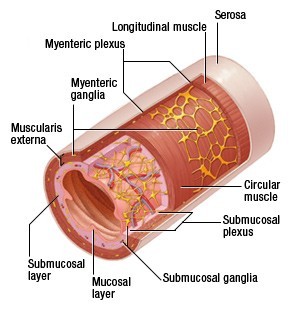
Scientists have recently identified a “second brain” in the body, known as the enteric nervous system. The enteric nervous system is a large collection of neurons located in the walls of the digestive tract, along the alimentary canal spanning from the esophagus to the anus. It is estimated that the “gut brain” contains anywhere from 200-600 million nerve cells1, significantly more than are found in either the spinal cord or the peripheral nervous system. The enteric nervous system, part of the autonomic (involuntary) nervous system, operates independently of, yet sends signals directly to, the central nervous system to regulate and communicate the status of gastrointestinal functions.

In response to the discovery of the “gut brain”, neuro- gastroenterology has emerged as a new field of scientific research. Leading scientists at Columbia University and UCLA describe the enteric nervous system as complex and responsible for many important bodily functions beyond that of merely digestion.

The enteric nervous system controls local functions of the entericgastrointestinal tract (fluid exchange, blood flow, digestive processes), regulates levels of neurotransmitters and hormones, and plays an important role in immune function.1 “Cutting-edge research is currently investigating how the second brain mediates the body’s immune response; after all, at least 70 percent of our immune system is aimed at the gut to expel and kill foreign invaders.”2 “The gastrointestinal tract also harbors an extensive endocrine signaling system, and many gastrointestinal functions are under dual neuronal and endocrine control.”1

Dysfunction of the enteric nervous system correlates with digestive as well as neurological disorders.2 Since 95% of the body’s serotonin is produced and stored in the digestive tract, gastrointestinal imbalance is often accompanied by mood disorders such as depression. This gut-brain connection may explain why antidepressants are commonly prescribed to address digestive disorders3. Alternately, some research suggests that antidepressants cause digestive disorders because they elevate serotonin levels2. Currently pharmaceutical companies are providing most of the funding for neurogastroenterology research because they see a large market opportunity in the potential findings.

Neurogastroenterology research has found a direct relationship between the body’s nervous and digestive systems. Therefore it is essential that a treatment plan addresses the nervous system in order to effectively treat digestive issues. Pharmaceuticals prescribed to treat the symptoms of gastrointestinal or mood disorders often have side effects, and are not the only treatment option. Research validates the efficacy of acupuncture5 and therapeutic massage6 as alternate approaches to balancing the nervous system and restoring proper digestive function. The objective of a treatment plan is to reduce or eliminate symptoms, restore the integrity of the gastrointestinal tract, and relieve stress in the nervous system to encourage greater body-mind health.

This is an original article from Dreamclinic, Inc. Dreamclinic is a Health and Wellness company committed to sharing information about commonly experienced health conditions and how they may be impacted through the use of bodywork and other natural approaches. Dreamclinic offers massage, acupuncture, and Reiki sessions at its Greenlake and Queen Anne clinics, as well as onsite massage at workplaces around Puget Sound. Contact us to learn more about how Dreamclinic can help you, your family or your workplace experience greater health.

References:
1. http://www.scholarpedia.org/article/Enteric_nervous_system#Regulation_of_gastrointestinal_endocrine_cells
2. http://www.scientificamerican.com/article/gut-second-brain/
3. http://www.touchpoint.dk/xdoc/wss/74/docs/285/Your_Gut_is_Wiser_than_You_Think.pdf
4. http://www.nature.com/nrgastro/collection/enteric/index.html
5. http://cim.ucsd.edu/clinical-care/acupuncture.shtml
6. http://www.hopkinsmedicine.org/integrative_medicine_digestive_center/services/therapeutic_massage.html
Image: http://www.mayo.edu/research/discoverys-edge/ibd-exploring-role-neurons-gut-motility

Other Resources:
http://www.utexas.edu/research/asrec/neuron.html
http://www.cumc.columbia.edu/dept/gsas/anatomy/Faculty/Gershon/