Improve Sleep with Acupuncture

by Diana Khoury

Up to 70 million Americans suffer from sleep disorders every year.1 Sleep problems range from mild to chronic and include insomnia, sleep apnea, restless leg syndrome and other, less common conditions. The Centers for Disease Control and Prevention (CDC) reminds us that “sufficient sleep is not a luxury—it is a necessity—and should be thought of as a vital sign of good health.”2

Causes
Changes in American society over the last several decades have contributed to an increase in sleep irregularities. Leading factors include higher stress levels than in past generations, busy 24/7 lifestyles, obesity, and overstimulation from increased access to TV, Internet, and personal electronics. As a society we are getting less and poorer quality sleep than ever before.

man-sleeping_hr“Sleep is something your body needs to recharge your batteries, and it affects nearly every aspect of your life,” says Marci Cleary, spokeswoman for the National Sleep Foundation. “It’s food for the brain.”3Since sleep is such an important indi- cator of overall health, it’s no wonder that deprivation negatively impacts the body and one’s quality of life.

Effects

Sleep loss has many negative effects, including low energy level and decreased ability to focus. Doctors say lack of sleep erodes memory and concentration, disturbs neurological function, inhibits tissue and muscle restoration and slackens reflexes.

According to the CDC, “Insufficient sleep is associated with a number of chronic diseases and conditions—such as diabetes, cardiovascular disease, obesity, and depression—which threaten our nation’s health. Notably, insufficient sleep is associated with the onset of these diseases and also poses important implications for their management and outcome.”2

Treatment

In response to the steep increase in sleep disorders, the number of accredited sleep clinics in the U.S. has more than tripled since 1995. At the same time, pharmaceutical companies have targeted sleeplessness as an attractive growth market for the coming years. Sleep clinics may be able to provide relief, but each visit to an accredited clinic can cost thousands of dollars. Drugs may address the symptoms of common sleep issues, but they can be addictive, have side effects, and do not address the root cause of the problem.

Acupuncture, as an alternative treatment for sleep problems, has been shown to outperform western medication due to its lack of side effects. In 2009, a clinical review of 46 research studies on the effects of acupuncture on insomnia concluded that acupuncture improves sleep duration and quality.4 One controlled study of anxiety sufferers and their sleep patterns demonstrated that acupuncture physiologically increased melatonin production, enabling participants to fall asleep faster and wake less during the night. Participants also reported reduced anxiety levels due to increased relaxation.5

In a study conducted in Brazil with sleep apnea patients, acupuncture measurably strengthened and reduced inflammation in the tongue muscle, decreasing incidences of the tongue falling back during sleep, blocking the airway.6 As a result, participants’ apnea symptoms were reduced and overall sleep quality improved.

To address sleep disorders appropriately, a qualified acupuncturist will first conduct a thorough intake and evaluation of your symptoms. This will allow the practitioner to create a targeted acupuncture treatment plan for maximum results: better sleep, improved health, and increased quality of life.

This is an original article from Dreamclinic, Inc. Dreamclinic is a Health and Wellness company committed to sharing information about commonly experienced health conditions and how they may be impacted through the use of bodywork and other natural approaches. Dreamclinic offers massage, acupuncture, and Reiki sessions at its Greenlake and Queen Anne clinics, as well as onsite massage at workplaces around Puget Sound. Contact us to learn more about how Dreamclinic can help you, your family or your workplace experience greater health.

References:
1. http://www.ncbi.nlm.nih.gov/books/NBK19961/
2. http://www.cdc.gov/sleep/
3. http://seattletimes.com/html/localnews/2002925590_sleepless12e.html  
4. http://www.ncbi.nlm.nih.gov/pmc/articles/PMC3156618/
5. http://www.ncbi.nlm.nih.gov/pubmed/14990755
6. http://www.sleepapnea.org/treat/treatment-options/acupuncture.html

Image: www.centerforspinaldisorders.com

Other Resources:

http://seattletimes.com/html/nationworld/2002911242_sleep05.html

Online Scheduling Now Available!

onlineschedulinggraphic

We are pleased to announce that Dreamclinic now offers online scheduling! Over the year we have received lots of requests for online scheduling and we have finally chosen an online solution that meets our needs while being fast and intuitive for users.  A few key features:
  • Schedule up to two hours in advance
  • Book at either clinic
  • Mobile and tablet friendly
  • Text or email appointment reminders
  • Schedule, reschedule or view history
For those of you who have already used our online scheduling system, please note that our system now requires a credit card on file.

New! Online Scheduling


Correct Breathing is Essential to Good Health

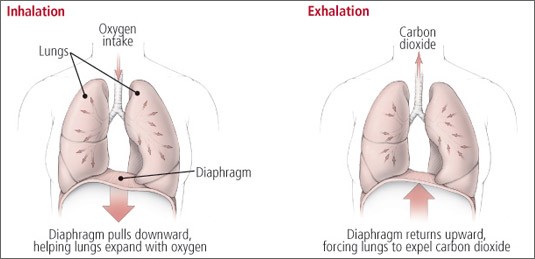
In The Healer’s Manual, author Ted Andrews outlines four tenets for maintaining health and preventing disease: proper diet, proper exercise, proper rest, and proper breathing.1 We don’t often hear breathing mentioned as an important aspect of well-being. But just as breath is essential to life, correct breathing is essential to optimal health.

When acute stress occurs, the body’s normal physiological adaptation is a shortened, rapid breathing pattern in the upper chest cavity. As high stress levels persist, this abbreviated breath pattern becomes a chronic habit, and produces a domino effect of negative consequences in the body.

deep_breathing

Shallow breathing significantly increases the amount of carbon dioxide the body exhales, markedly altering the body’s pH and creating a condition called respiratory alkalosis. “Increased pH (alkalosis) causes smooth muscle constriction. Smooth muscles surround the blood vessels and the gut and are embedded throughout connective tissue. As a result, one of the first effects of alkalosis is that the diameter of blood vessels reduces, impeding normal circulation, increasing blood pressure, as well as altering fascial tone throughout the body and interfering with normal peristaltic function in the intestines, thus leading commonly to irritable bowel syndrome or constipation. One research study suggested that up to 90 percent of non-cardiac chest pain can be brought on by [rapid, shallow] breathing.”2

Prolonged stress locks in this abnormal breathing pattern, affecting the body structurally, physically, and physiologically. As the breath remains shortened, alkalosis is induced, “making delivery of oxygen to the tissues (brain, muscles) less efficient, leading to reduced motor control, lower pain threshold, impaired balance, increased feelings of agitation, fatigue, and a variety of cognitive (“brain-fog”) and emotional repercussions (anxiety, panic tendencies, etc.).”2

Over time, dysfunctional breathing becomes a cycle, making it difficult for the body to revert back to its normal function. “Chest breathing is inefficient because the greatest amount of blood flow occurs in the lower lobes of the lungs, areas that have limited air expansion in chest breathers. Rapid, shallow, chest breathing results in less oxygen transfer to the blood and subsequent poor delivery of nutrients to the tissues…Using and learning proper breathing techniques is one of the most beneficial things that can be done for both short and long term physical and emotional health.”3

The deep breathing techniques taught in yoga provide multiple benefits. A yoga student must be physically and mentally present to learn specific techniques, creating self-awareness of one’s breath in the moment it is occurring (being present). Yoga breathing also has an important physiological component. The deep exhalations of abdominal breathing stimulate nerves at the base of the lungs which activate the parasympathetic nervous system, inducing relaxation and allowing normal physiological functions to reset.

Massage can help break dysfunctional breathing patterns and assist the body in returning to health. As muscle tension is released, the body’s circulation and oxygenation increase and the nervous system is calmed, breaking the stress cycle and creating a higher state of well-being.

This is an original article from Dreamclinic, Inc. Dreamclinic is a Health and Wellness company committed to sharing information about commonly experienced health conditions and how they may be impacted through the use of bodywork and other natural approaches. Dreamclinic offers massage, acupuncture, and Reiki sessions at its Greenlake and Queen Anne clinics, as well as onsite massage at workplaces around Puget Sound. Contact us to learn more about how Dreamclinic can help you, your family or your workplace experience greater health.

Resources:
1. Andrews, Ted. The Healer’s Manual. Woodbury: Llewellyn Publications, 2006, page 5. Print.
2. http://www.massageandbodywork.com/Articles/JuneJuly2007/understandingbreathing.html
3. http://www.amsa.org/healingthehealer/breathing.cfm

Image: www.health.harvard.edu

Reduce Neck Pain & Tension

by Diana Khoury

Neck pain and tension is common in today’s society. It can be caused by an injury or by sitting, standing, walking or sleeping in a poor position. Neck tension is exacerbated by stress, creating an imbalance in the internal environment of the body and disturbing its normal functioning.

Seven of the body’s eleven major systems pass through the neck.* Tension restricts range of motion and inhibits the pathways that allow blood, lymph, hormones, spinal fluid, nerve impulses, food and air to travel between the head and the rest of the body.

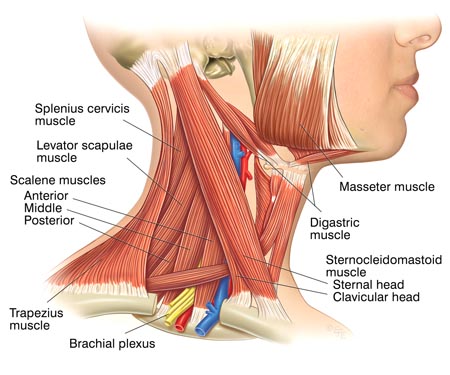
sternocleidomastoid2“Physical structures [become locked] when the body fails to adapt to an overload of stress. This may result in pain, stiffness, numbness and postural distortions. In addition, the body’s capacity to co-ordinate its functions is undermined.”1Since multiple systems are affected, it is no wonder that constriction of the neck area has a direct, negative impact on the entire body and on one’s overall health.

Structurally, a stiff neck is caused by contraction of the musculature. “When the neck is tense, the shoulders rise and the chin moves up and forward, causing further misalignment and pain. Neck tension can often lead to tension headaches, a problem affecting 78 percent of the general population.”2

Chronic neck tension has a ripple effect on the nervous system. Since “the lower neck supplies the nerves to the arms, there may be pain or numbness in the shoulder, arm or hand. Muscles may be weakened, resulting in difficulty in grasping objects. The tension in the neck may cause headaches or pain in the face or jaw…Body stress in the neck area may also have an impact on nerve connections to internal organs, such as the heart, lungs and digestive system, undermining normal function.”1

Many people simply accept neck problems as a part of life, but this does not have to be the case. To decrease daily stress and support a healthy neck:

  • Practice good posture. Research ergonomics or take a yoga class to learn and use proper posture while working at the computer, sitting, standing and walking.
  • Take rest breaks from computer use every 20 minutes. Give your eyes and brain a rest, and take a stretch to lengthen muscles that have stiffened while sitting.
  • Drink plenty of water. Hydration transports essential nutrients to your cells.
  • Breathe. When you feel stress increasing, pause. Take a few deep breaths, and exhale fully. This soothes the nervous system and reduces stress hormone levels.
  • Exercise regularly. Exercising increases circulation, flexibility and improves oxygen flow to the brain.
  • Get plenty of sleep. The body needs rest, even more so when stressed. Sleep on your back instead of the stomach, to avoid craning the neck to one side.
  • Book a massage. Research and empirical evidence show that massage effectively releases muscle tension and pain, improves range of motion, and reduces stress levels in the body. You may feel relief from neck pain and tension in as little as one massage session, yet continuous relief can be found by making it a part of your ongoing wellness plan.

This is an original article from Dreamclinic, Inc. Dreamclinic is a Health and Wellness company committed to sharing information about commonly experienced health conditions and how they may be impacted through the use of bodywork and other natural approaches. Dreamclinic offers massage, acupuncture, and Reiki sessions at its Greenlake and Queen Anne clinics, as well as onsite massage at workplaces around Puget Sound. Contact us to learn more about how Dreamclinic can help you, your family or your workplace experience greater health.

* Skeletal, muscular, nervous, endocrine, digestive, respiratory and circulatory systems.
References

1. http://www.bodystressrelease.co.za/bsr_neck.htm
2. http://www.wikihow.com/Reduce-Neck-Tension
Image: http://www.ginamccafferty.massagetherapy.com/neck-pain

Other Resources
http://www.factmonster.com/ipka/A0774536.html