
3 Science-Approved Reasons to Meditate

6174344321_a6b3b6aa69_bOnce considered a practice only for “granola-eating hippies,” meditation has gone completely mainstream. It’s been revered for its life-changing benefits, as well as being cited as a frequent (if not daily) practice of some of the happiest and most successful people in the world.

And it’s not just a bunch of hype. From improving our quality of sleep to our overall happiness, even science backs up the positive impact it can have on our lives. Here are five science-approved reasons to start meditating today.

You’ll Sleep Better
Sleep is essential to the function of our brains. Without enough proper rest, we can be prone to headaches, higher levels of stress, and lower productivity. However, meditation has been shown to increase our levels of melatonin, which is the chemical that helps us fall and stay asleep. In fact, the practice may even be able to help those with serious sleep disorders. A study on mindful meditation found that those who suffer with chronic insomnia were able to reduce their symptoms, with 79% maintaining a better quality of sleep six months after treatment.

You’ll Increase Your Happiness and Reduce Stress
One of the biggest reasons to meditate is that it helps us gain a clearer understanding of what’s going on in our minds. By doing so, we can more easily recognize negative thoughts and emotions, and learn how to let them go. By refusing to let negativity consume us, we can also significantly lower our dangerous levels of stress. A study conducted at Harvard Medical School found that engaging in meditation not only lowered the “fight-or-flight” response that we feel when we’re stressed or afraid, but it also had positive effects on heart rate and blood pressure.

You’ll Improve Your Relationship
Oddly enough, your private moments of meditation may just be the best thing you can do for your relationships with other people. The practice can help you better recognize your own emotions and have more compassion for those around you. These two things combined can help you feel less angry and more loving, creating lasting harmony in your relationships. A study from UC San Francisco looked at the effects of meditation on marital relationships in particular. Those who practiced meditation had a better emotional understanding of the facial expressions in their partner and were, therefore, better able to resolve conflicts and provide support.

If you would like more information on starting a personal meditation practice, please visit Shambhala

Photo credit: Some rights reserved by Nickolai Kashirin
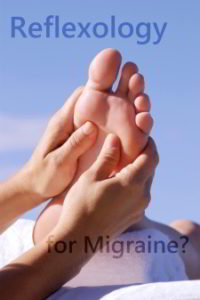
Reflexology for Migraines

reflexology massageWhile it’s safe to say that everyone experiences the occasional headache, more than 10 percent of the world’s population suffers from debilitating migraines. It’s not just pain that’s felt when these migraines occur, but also symptoms such as nausea, lightheadedness, and sensitivity to light. According to the Migraine Research Foundation, more than 90 percent of sufferers experience these migraines so severely that they’re unable to function normally during an attack.

Traditional treatment for migraines involves both over-the-counter pain relievers and heavier prescription drugs. But for those looking for a more holistic approach, reflexology for migraines may be able to bring immediate migraine relief.

For many, applying pressure to specific areas of the feet can release blocked energy and encourage the corresponding organs to begin functioning as they could. While there are several points along the feet that can serve to relieve these symptoms, the primary one is known as Tai Chong. This is especially important because it runs along the meridian of the liver, which is key of ensuring that energy is running smoothly through the body.

One study, conducted as far back as 1995 by the National Board of Health Council in Denmark, found that 16 percent of people who underwent reflexology were completely cured three months after treatment. Of those who weren’t completely cured, 65 percent reported a significant decrease in symptoms. Another trial out of Denmark studied migraine sufferers who’d been ineffectively treated with morphine, ketogan, and albergin. Each of these participants received an average of 12 reflexology treatments. While 10 percent reported feeling just slightly better, 75 percent said they either felt significant improvement or they no longer suffered from migraines at all.

For those looking to see if foot reflexology may alleviate their migraines, focus on the Tai Chong point on the top of the foot, in the webbing between the big and second toes. If you’re experience migraine symptoms on both sides of your head, this can be done on both of the feet. If you’re only feeling symptoms on one side of your head, focus on the foot that’s on the opposite side of your body. Feel for where the bones of those two toes intersect. Slide and press your thumb into the depression between those bones, holding for about a minute.

The Tai Chong pressure point can be very powerful. For this reason, it’s not advised for those who are pregnant, unless under observation. If you’re interested in learning more about reflexology, or to have a treatment plan designed specifically for your needs, schedule an appointment with a licensed therapist today.

4 Steps to a Better Night’s Sleep

According to Sleep Disorders and Sleep Deprivation, an estimated 50 to 70 million U.S. adults chronically suffer from sleep problems, which can negatively affect health over a period of time. As explained in the book, “the cumulative long-term effects of sleep loss and sleep disorders have been associated with a wide range of deleterious health consequences including an increased risk of hypertension, diabetes, obesity, depression, heart attack, and stroke.”

Despite the risk of side effects and dependence, Americans are still spending roughly $100 million dollars a year on over-the-counter sleep medications. While these may provide temporary relief, these are not intended for long-term use. In fact, Dr. Meir Kryger, a professor of sleep medicine at Yale, warns against using anything that isn’t addressing the cause of the problem. “I’d say 99 percent of the products being sold for sleep enhancement are a waste of money.” Instead, he recommends ways to improve your sleep by optimizing your environment and relaxation.

If you’ve been struggling to get at least seven hours a night, don’t go straight to the pills. Try these four steps leading up to tucking yourself into bed.

2 Hours Before: Lower Lights
Bright lights trigger our brains to be alert, while lower levels signal the sleep hormone melatonin. Dim the lights around your home roughly two hours before bedtime. If you plan to read, use a low-wattage light bulb. At around an hour before, turn off all electronics, which emit blue light that harms healthy sleep.

1 Hour Before: Wind Down
It’s impossible to go from 60 to 0 without slowing down in between. The same goes for your sleep. Set yourself up for a good night’s rest by winding down an hour before bed. Spend 20 minutes prepping for the next day (packing your lunch, selecting an outfit, etc.), 20 minutes taking care of personal hygiene, and finally 20 minutes of relaxation in bed.

30 Minutes Before: White Noise
It’s important to drown out outside noise, but you don’t want your bedroom to be so quiet that any tiny sound will wake you in the night. This is where white noise comes in. Before settling into bed, turn on a fan or an air conditioner. These come with the added bonus of being able to help regulate the temperature of the room, which should be between 65° and 75°F.

20 Minutes Before: Breathing and Meditation
One of the most effective ways to fall asleep quickly is to focus on deep breathing. This reduces heart rate and blood pressure, priming the body for sleep. After turning off all the lights, lie down in bed. Place your hands on the lower part of your stomach. Breathe in deeply for five seconds, hold for three, and exhale for five. Do this between 10 and 15 times, concentrating on the up-and-down movement of your hands. This 20 minutes is also a good time for mindful meditation. Focus on the different aspects of your life, making sure to look at just one thing at a time. Give each issue the attention its needs, then let it go.

If you’re still struggling with a sleep disorder, acupuncture may be another solution. Learn more about how the treatment can help.

3 Easy Breathing Techniques for Stress Relief

It’s been said there are only two things we can be certain about: death and taxes. Well, we think it’s about time to add stress to that list. The truth is, if you’re alive, you’ve got stress. Stress is a natural reaction to experiences that can have a wide array of effects. We usually think of stress in a negative way, but it can actually be useful in bad or dangerous situations. (Think fight-or-flight response.)

Unfortunately, stress isn’t typically so good. While it can be beneficial to us in the short term, chronic stress can cause a number of symptoms that affect our health and wellness. The hormones that get triggered can lead to anything from digestive disorders to depression to higher risks for heart disease.

It can be easy for everyday troubles to set off these hormones. When you start to feel yourself getting tense, put your health first by trying one of these breathing techniques for stress relief. Each of these are perfect for beginners (ie: you don’t have to have years of yoga under your belt in order to do them correctly) and they can be done quietly in almost any location.

Abdominal Breathing
Place your right hand on your chest and your left hand on your stomach. Fill up your lower lungs (not your chest), being mindful to breathe in through your nose and out through your mouth. Do this eight to 10 times, then add a second step: After inhaling into your lower lungs, continue inhaling into your chest. Feel the tension leave your body as you exhale slowly. Do this another 10 times. This technique can lead to an immediate reduction in heart rate and blood pressure, and could be particularly useful before a stressful event.

Progressive Relaxation
Close your eyes and focus on tensing and relaxing individual muscle groups. Start at the bottom of your body with your toes and feet, moving up until you reach the face and jaw. Do this while maintaining deep, slow breaths. As the muscles tense, breathe in through your nose for a count of five (start at three if five feels too difficult), then breathe out through your mouth as the muscles release. This technique is wonderful for nixing tension from head to toe, and can be done nearly anywhere even while driving.

Breath Counting
Sit in a comfortable position with your spine straight and your head just slightly forward. Close your eyes and take a few deep breaths. Let them come naturally without trying to manipulate them. Next, breathe in through your nose, then count to one as you exhale through your mouth. Repeat, counting to two as you exhale, and so on up to five. (Don’t worry about counting while you inhale.) Once you’ve reached five, begin a new cycle. Continue to start new cycles after reaching five, until your mind has wandered to the point that you find yourself counting up to eight or more. This breathing technique should have the same effect as meditation, leaving you centered and refreshed.

Healthiest Complete Proteins for Vegans and Vegetarians

Proteins are often considered the building blocks of the human body. They’re made up of any number of 20 different amino acids, which are responsible for promoting cell growth and repair. Proteins for vegans and vegetarians are important to incorporate into the diet. Of these 20, there are nine the body can’t produce on its own, meaning we need to eat them in order to reap their benefits. When a food source contains all nine of these essential acids in roughly equal amounts, it’s known as a complete protein.

While meat, eggs, and dairy are all complete proteins, some or all of these are off-limits for vegans and vegetarians. Thankfully, there are plenty of amazing ways to get complete proteins without sacrificing your diet. And as meat-based meals are typically more expensive and higher in calories — not to mention being potentially harmful to the environment — carnivores are also encouraged to swap in some these other options when they can.

Here are three of the healthiest complete proteins for vegans and vegetarians (or anyone else observing Meatless Monday).

Quinoa
There’s a reason quinoa has become so popular over the last several years. It boasts eight grams of protein per one-cup serving and has high levels of iron, magnesium, and manganese. It’s the perfect substitute for rice or couscous, and its flour can be used to make muffins, cookies, and cakes. “Because of its high protein values and unique amino acid composition,” NASA even wants to grow quinoa in spaceRecipe we love: Quinoa and red lentil burgers

Buckwheat
For those steering clear of gluten, fear not: Buckwheat isn’t actually wheat at all, but a grain-like seed that’s related to rhubarb and sorrel. It packs six grams of protein into a single serving, and is terrific base for making pancakes and noodles. Like quinoa, it’s high inmagnesium, manganese, and fiber. Studies have shown it can even help control blood sugar levels, which may be especially useful for those with diabetes. Recipe we love: Gluten-free buckwheat pancakes

Mycoprotein
Mycoprotein was originally developed in the 1960s as a way to combat food shortages. The meat-substitute is essentially fungus that’s been fermented in tanks. While it might not sound too appealing, mycoprotein is low in calories, high in calcium, and has 13 grams of protein in just half a cup. Today, it’s the key ingredient in the product range Quorn, which sells everything from meat-free chicken to burgers to bacon. Recipe we love: Stuffed peppers parmigiana

Other ways to get complete proteins are through proper food combinations. Consider hummus and pita bread, red beans and rice, and lentil barley soup.