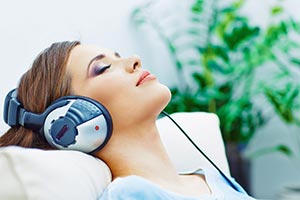
We’ve gotten to the point where people are Instagramming pictures of their meals before touching their food and live-tweeting about their activities without actually experiencing them. It goes without saying, but we are living in an era of constant connectivity.
As a result, it’s gotten harder and harder to unplug and enjoy complete relaxation. We can’t deal with daily stress or anxiety in the proper fashion if we’re responding to texts or emails every five minutes.
With all the distractions we face with technology, the most successful ways to relax and de-stress have to be easy and effective. If we can’t put down our phone for two hours, how are we going to commit to a completely new habit or routine if it’s not super easy?
That’s why vibroacoustics is perfect for unplugging and de-stressing in our 24/7 internet world. Recently researched in colleges across the country, it is a type of non-invasive, non-chemical stress therapy that offers serious benefits in as little as 20 minutes.
So how does it work?
The sound therapy reduces stress, anxiety, and nerves by running soothing, low level sound waves through your body. Because sound is vibration, it affects all parts of your body, not just your ears. In fact, each one of your organs, bones, and cells has its own specific resonance frequency, which means that your body is quietly humming its own tunes throughout the day. When we are stressed, these frequencies can be disrupted, which can in turn affect our entire health. With vibroacoustics, low-grade vibrations are delivered throughout your body by a special chair that has built-in speakers. It’s not just a sound — it’s an actual pulsating sensation.
What are the benefits?
There are no adverse effects of vibrational therapy. Quite the opposite –vibroacoustics has been proven to significantly improve your health and mindfulness by:
- Helping you catch those zzzs. Vibroacoustics stimulates melatonin, a natural hormone in your body that increases and deepens sleep.
- Mending physical aches and pains. When you’re stressed, your immune system can overwork itself and become run down, making you susceptible to injury and illness. Vibroacoustic therapy gives your immune system a chance to reboot and repair injuries like muscle strains and pulls, post-surgery pains, menstrual cramps, and tightness in joints.
- De-activating stress hormones. Stress can result in fatigue, depression, anxiety attacks, panic, and high blood pressure. Vibroacoustic sessions tone down these hormones so that you can finally relax and unwind.
- Energizing and balancing you. You may think that “relaxed” and “energized” are opposites, but when your body is at ease, you will find that you have more energy to do the things you love. Vibroacoustics increases endorphins, which improves your mood and energy levels. In addition, the therapy moderates serotonin, a neurotransmitter that can cause unwanted emotional spikes.
Studies at the National Institute of Health have shown vibroacoustic sessions to be extremely safe and effective in reducing stress, anxiety, and fatigue. And, you can reap these benefits in just 20 minutes. Everyone, no matter how much you tweet or post on Facebook, has 20 minutes in their day to relax with this new technique.