
 Clients come to us in all kinds of states, and that can lead to not just potentially awkward situations, but sincere opportunities for you, as a massage therapist, to earn deeper trust from your clients by showing professional empathy and concern while maintaining a responsive, high level of care. Impatience on the part of the client is one such chance. You know what I mean: while you’re asking them questions about whether there are any areas of their body where they are experiencing pain or discomfort and would like some extra focus, they are literally tapping their fingers on their knee, sighing aloud, and saying with their body language, “Skip all this talk. Let’s just get on the massage table.”
So, what do you do? We massage therapists are wired to please. So, many of us will sense the frustration and cut the intake short to go ahead and meet the client’s unspoken wish by getting them right onto the table. A more effective approach would be to continue to hold to your intention to provide the best session by continuing with a thorough intake, while also taking a moment to directly address the client’s impatience. Try asking something like, “I see you tapping your fingers. Are you concerned about us getting enough time on the table?” You can then reassure them, “Please don’t worry. We’re still going to get the full 60 (or 90) minutes.” Stand firm in your intention and show them how it serves them by adding, “It is important for me to ask you a few more questions because it helps me give you the massage that best meets your needs.”
While the natural temptation may be to just succumb to the client’s impatient energy and rush them right onto the table, when you politely and professionally share your intention to understand their goals better, it will earn you their trust. They will come to respect your practice as a place where their needs matter and are attended to, which increases the likelihood that they will seek your services again.
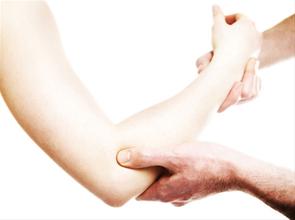 Massage is for more than just the muscles. The skin, the fascia, and the lymphatic system are all affected, as well. Even the “boney landmarks” of the body—the knees, elbows, and the little knobs around the ankles benefit from, and can contribute to, a satisfying and relaxing massage experience. During a recent massage session, the therapist was working along the muscles of my lower leg. As he moved skillfully upwards, he jumped right over my knee and proceeded to glide along my quads.
 Have you ever had a client who walks into the massage room with you and won’t even look up? They’re like a dark, stormy cloud. You can tell that something’s going on, but you don’t know what it is. Maybe they’re upset. Maybe they’re mad. Maybe they’re mad at someone else. Maybe they’re mad at you.
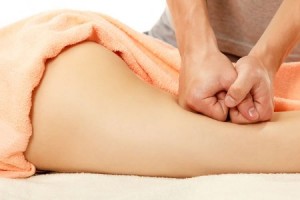 Body modesty is always an issue, given that our clients quite literally bare all when they are in our care. This can lead to a question for some therapists around the matter of whether a typical massage session should include work on the glutes (a.k.a. the muscles of your hiney).’
 We all need to be listened to, but sometimes, that need can actually obscure communications. Take care not to be misled when a client gets carried away responding to your intake questions. Massage sessions typically begin with a question from the therapist to the client along the lines of “What would you like to work on today?” or “What brings you in today?” or one of my favorites, “Are there any parts of your body that hurt?”
 Unique and specific techniques, like myofascial release, can greatly enhance the therapeutic benefit of your work on your clients, but when using them, it’s important to consider, and appropriately set, the client’s expectations for the session. Myofascial release is a wonderful way to create space for muscles to relax. Tension in muscles can sometimes be caused by the layer of membrane, called fascia, that surrounds the muscle group, which can be adhesed or dehydrated, preventing the muscles from moving freely.
 We’ve all heard from clients the occasional horror stories of their having been “brutalized” in a session with another massage therapist in which techniques were used that were so deep as to be painful and leave them bruised. Some of us may have even experienced that type of massage ourselves. How does that happen?
 I’ve noticed a ‘narrowing syndrome’ that sometimes develops among experienced massage therapists. When you first go to massage school, you learn all sorts of techniques which are new and exciting, and you try them all on your clients. Then, as you practice and become increasingly more confident, you find that a certain set of techniques emerge as your favorites. You develop a level of comfort and expertise with them, and you use them increasingly often. What can happen over time, though, is that by favoring those few techniques, many of the others that you learned go unpracticed and, eventually, get forgotten. This narrowing of your repertoire can lead to clients experiencing massage from you that consists entirely of only one or two techniques.
 Let’s say you have a big, beefy athlete of a client on the table, with lots of delicious areas to work on. You dive in. You get the belly of the muscles. You get into the soleus, work their erectors. You proceed to work on their arms and get into the deltoids. Everything’s great, but you have to ask yourself: are you massaging the whole muscle?
 In today’s digital age, with so many of our clients (and ourselves!) spending so much time hunched around our smartphones, curled up with our tablets, and bent over our laptops, a new syndrome, which I call “computeritis,” seems endemic. It may be common for massage therapists once they hear of a client’s heavy use of such devices to jump to conclusions as to the culprit of the client’s pain. It’s important that ‘Computeritis” not be our first or only assumption when a client presents with neck or shoulder pain and tension. It’s vital that we get a fuller picture of our client’s lifestyle, without which we could very well be assuming and jumping to incorrect conclusions and to an incorrect treatment approach.